Palia Nikiti
The old village of Nikiti
Ten minutes uphill lies the village the village once fled to.
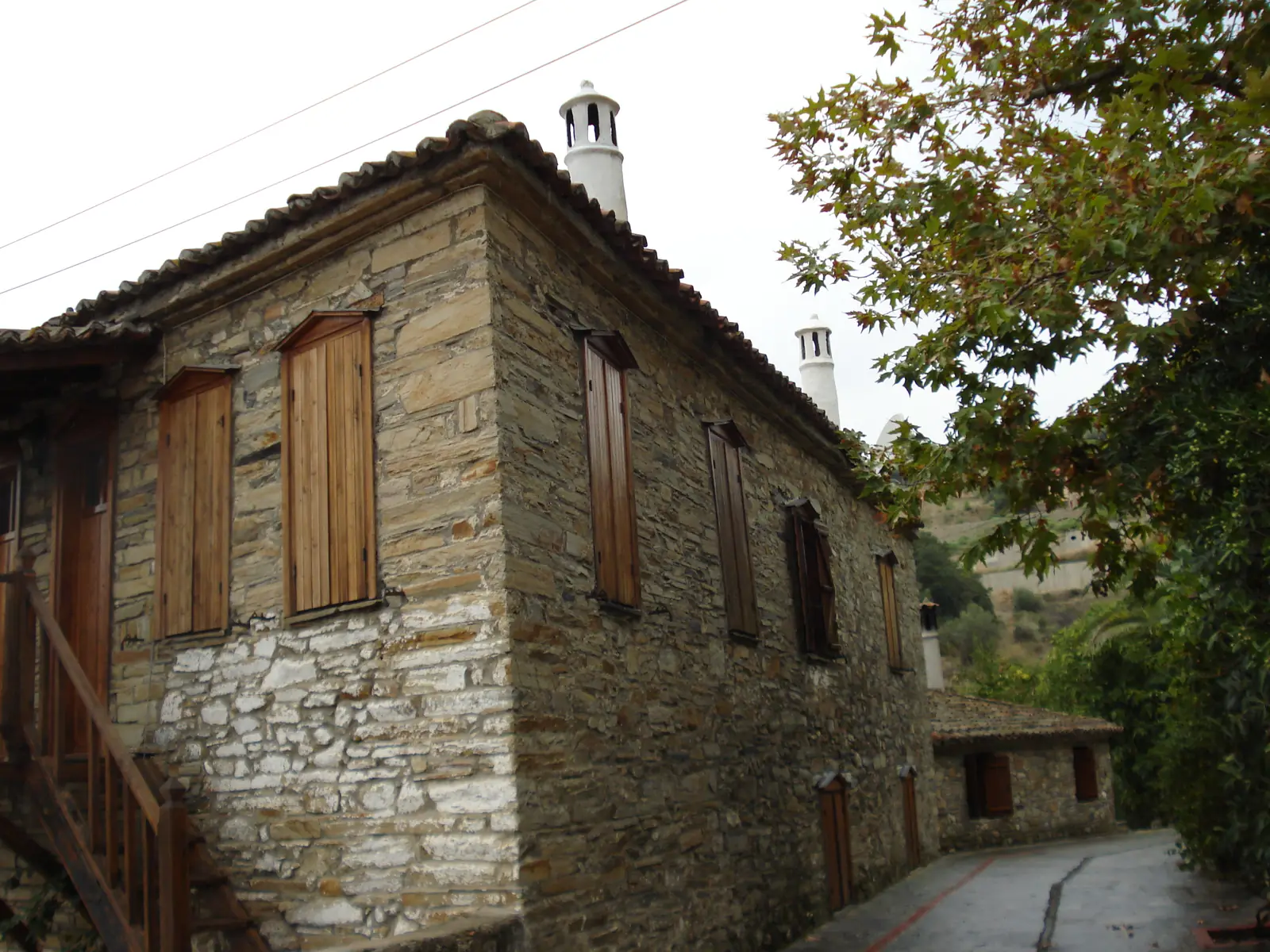
Foto: Mihail Sotirov / Wikimedia Commons, gemeinfrei
Palia Nikiti
Ten minutes uphill lies the village the village once fled to.
Most visitors see the promenade, the beach and the tavernas along the water. That is the younger part of Nikiti. The older one is ten minutes uphill — and it is the reason Nikiti exists at all.
The settlement goes back to the late Byzantine middle ages. Tradition holds that in the 14th century the people of the coastal settlements of Elia, Kastri and Agios Georgios moved inland and uphill — not for the view, but because the shore was no longer safe from pirates. A village on a hill sees boats coming. A village on the beach does not.
Under Ottoman rule Nikiti grew into one of the largest villages in Chalkidiki. Only after liberation in the Balkan Wars of 1912 did the hill lose its purpose: people built new houses down by the water, the upper village was gradually abandoned and fell into ruin. That you can walk through it today is thanks to restoration that began in the late 20th century alongside tourism.
The houses standing there now date mostly from the middle of the 19th century to the 1930s — Macedonian stone building, wooden balconies, courtyards, red tiled roofs, cobbled lanes. In places the core of the fabric goes back as far as the 1830s.
01
The old village's main church occupies the highest point, looking out over the Toroneos gulf. It was built around 1867. More telling than the date is what it stands on. The church was built on the foundations of an ancient watchtower. The hill had already been used once for exactly the reason it was used again in the 14th century.
02
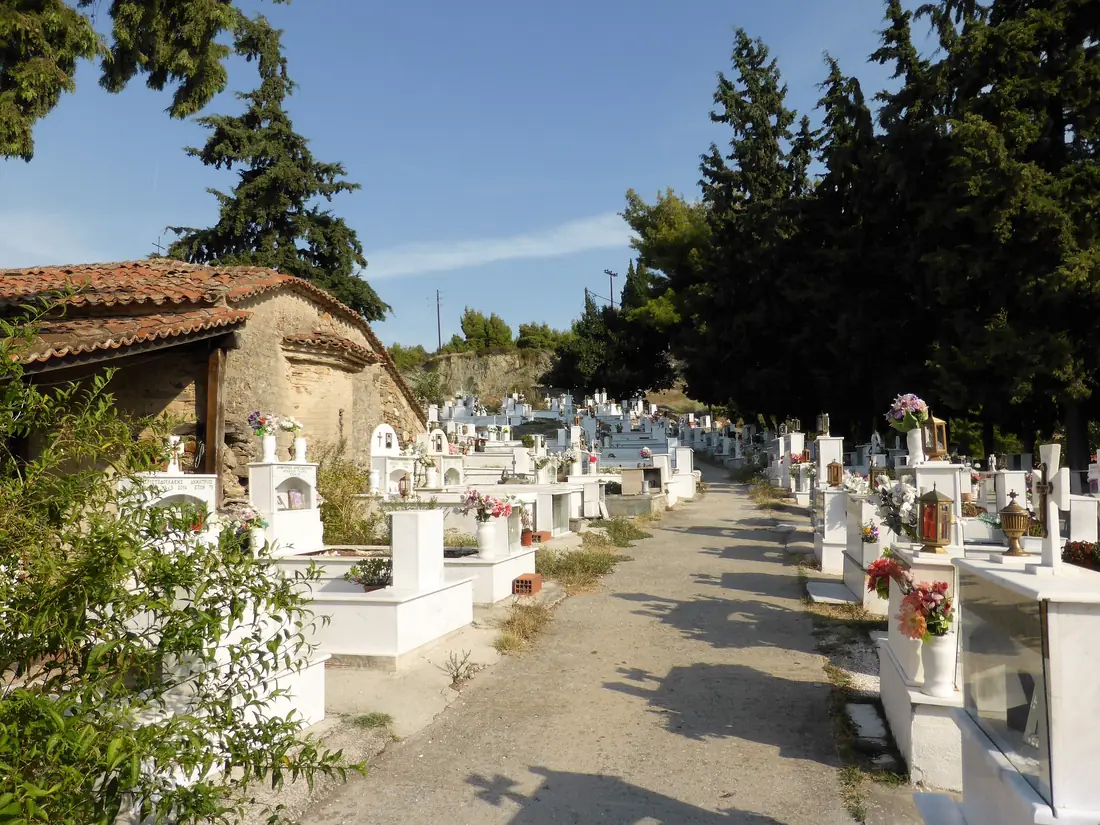
Modest and easy to walk past, but the oldest structure in the village: the church by the cemetery dates from the 16th century — two hundred years older than anything else up there.
03
The old primary school dates from the same period as the main church and now houses Nikiti's Historical and Folklore Museum. Among other things it documents the beekeeping tradition — Nikiti counts as one of Europe's most significant honey-producing towns, which is not a marketing line but the second economic reason the place exists. The first is the olive.
04
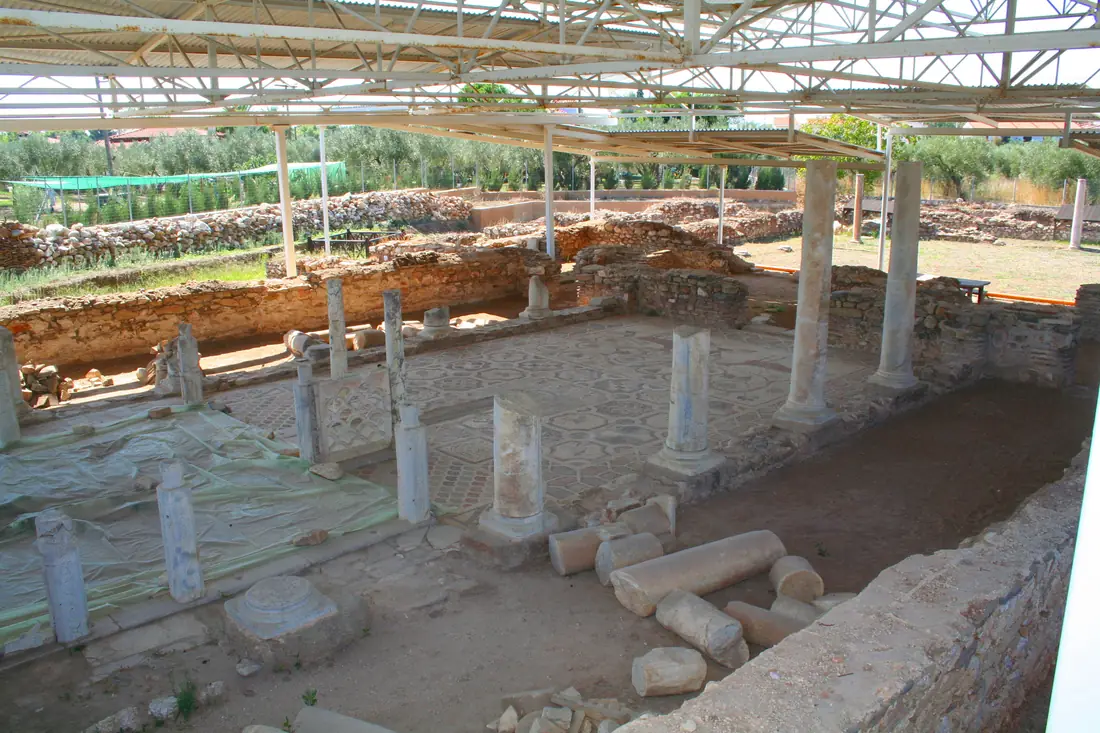
An early Christian basilica with mosaic floors, from the 5th century — a time when neither the upper nor the lower village existed. Nikiti is older than both of its halves.
It starts where the shops on the coast road end, and it is uphill from there. Allow about 45 minutes there and back — not because of the distance but because of the gradient and the cobbles. Proper shoes are a good idea; thin-soled sandals are not.
At the top is the village square with an old plane tree and tavernas beside it. From there the view runs over tiled roofs and olive groves to the Toroneos gulf and the Kassandra peninsula opposite.
Friday morning is market day in Nikiti, roughly half past eight to half past one: fish, olives, olive oil. It is reckoned to be one of the less touristy markets, because locals shop there too. Nearby it is Nea Moudania on Wednesdays, Neos Marmaras on Thursdays and Sykia on Saturdays.
Back down without driving.
Blue Breeze is in the newer part of the village — the old lanes are a walk, not an outing.
Discover the suite How to get here in the first place: getting to Nikiti.