Eat & drink
Eating in Nikiti
Two rows define the village: the promenade by the water and the square in the old town. They are not the same thing.
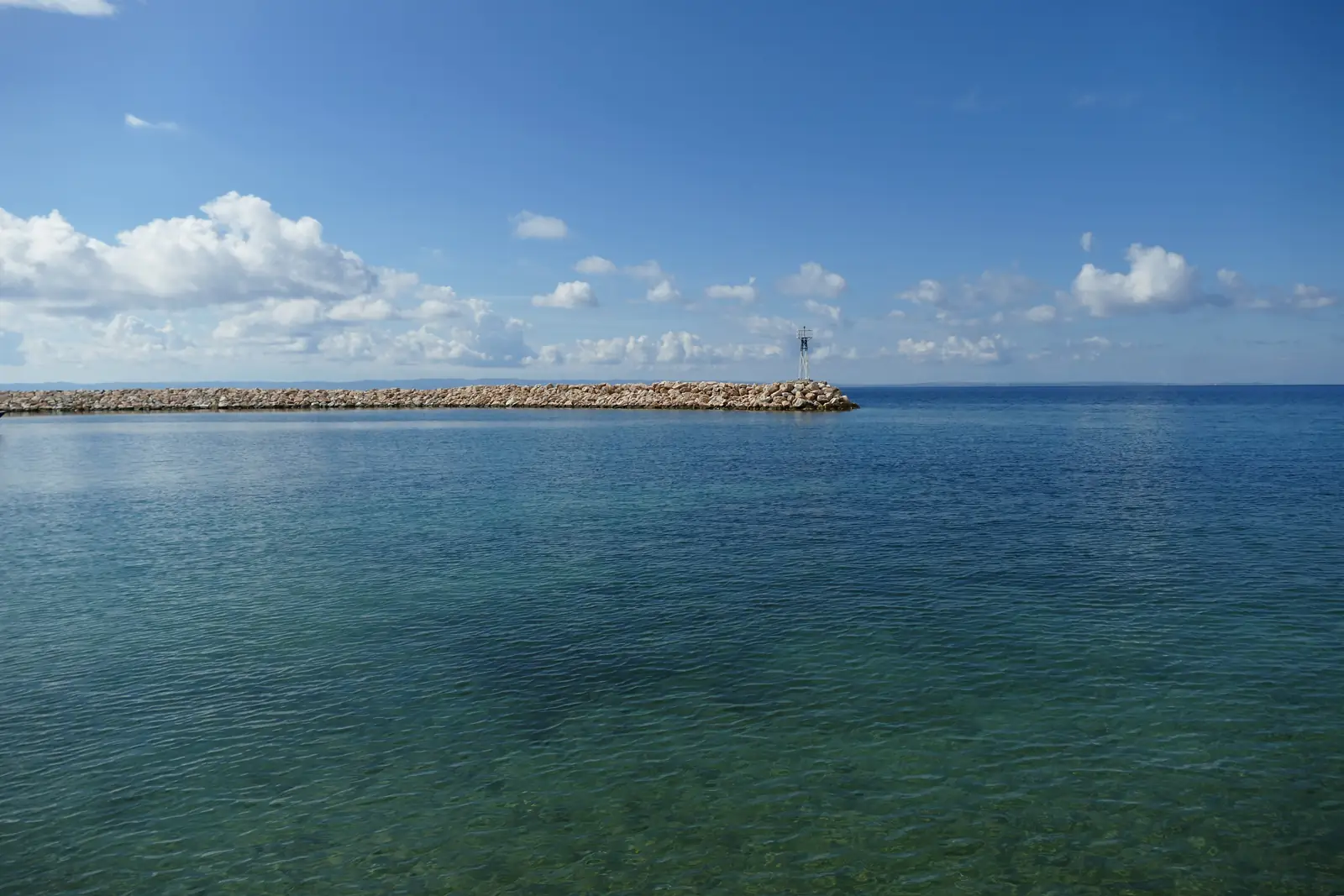
Foto: Kritzolina / Wikimedia Commons, CC BY-SA 4.0
Eat & drink
Two rows define the village: the promenade by the water and the square in the old town. They are not the same thing.
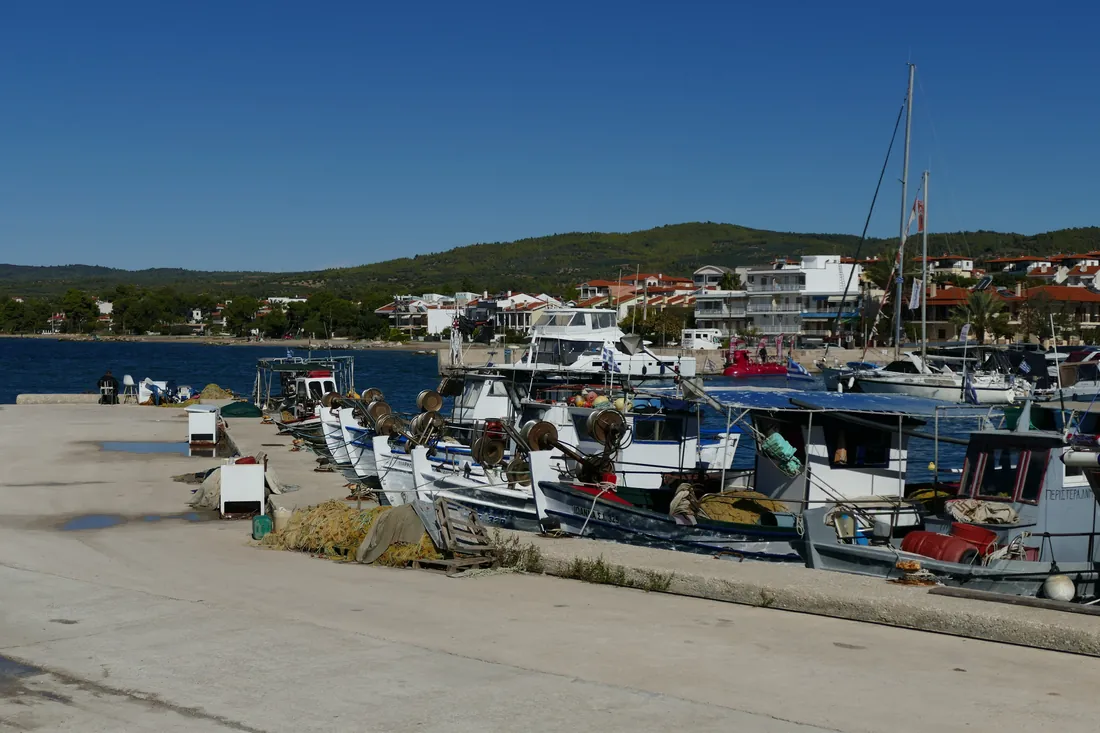
Nikiti has two culinary axes and they are not the same thing. Down by the water runs a pedestrian promenade of fish tavernas, cafés and bars — the modern heart of the village. Up in the old town there is a square with a large plane tree, and the cooking there is different: charcoal, meat, home food.
We know some of these places ourselves. The list grows with every stay.
Greek mealtimes run later. Lunch between noon and five with a peak around two; dinner between six and eleven with a peak around nine — some people are still eating at eleven. Sit down at seven and you will often be alone; arrive at half past nine in July without a booking and you may be queuing.
Food is ordered for the middle of the table. Several starters, one or two mains, bread, and you share. That is not a custom laid on for visitors, it is simply how it works — and the reason children's menus are rare and nobody goes hungry anyway.
On tipping: three to five euros on small bills, otherwise five to ten per cent.
01
The place where the Greeks sit — run by two brothers from Thessaloniki. The cooking is more modern and the prices above the village average; the tables run down into the sand. Greek travel magazines cover it regularly.
02
A fish taverna with white loungers under blue umbrellas in front. On the menu: fresh fish, grilled squid and garidomakaronada — pasta with prawns.
03
A fish taverna, consistently busy, with large portions. Specialities: courgette balls with tzatziki, and grilled Chios cheese.
04
More than twenty dishes cooked fresh each day, around nine euros — the kind of place where you point at the pot rather than read the card. At peak times service can take a while.
05
Marina is both fish taverna and guesthouse and sits by the harbour. Iskios has tables in the sand and a fish counter to choose from.
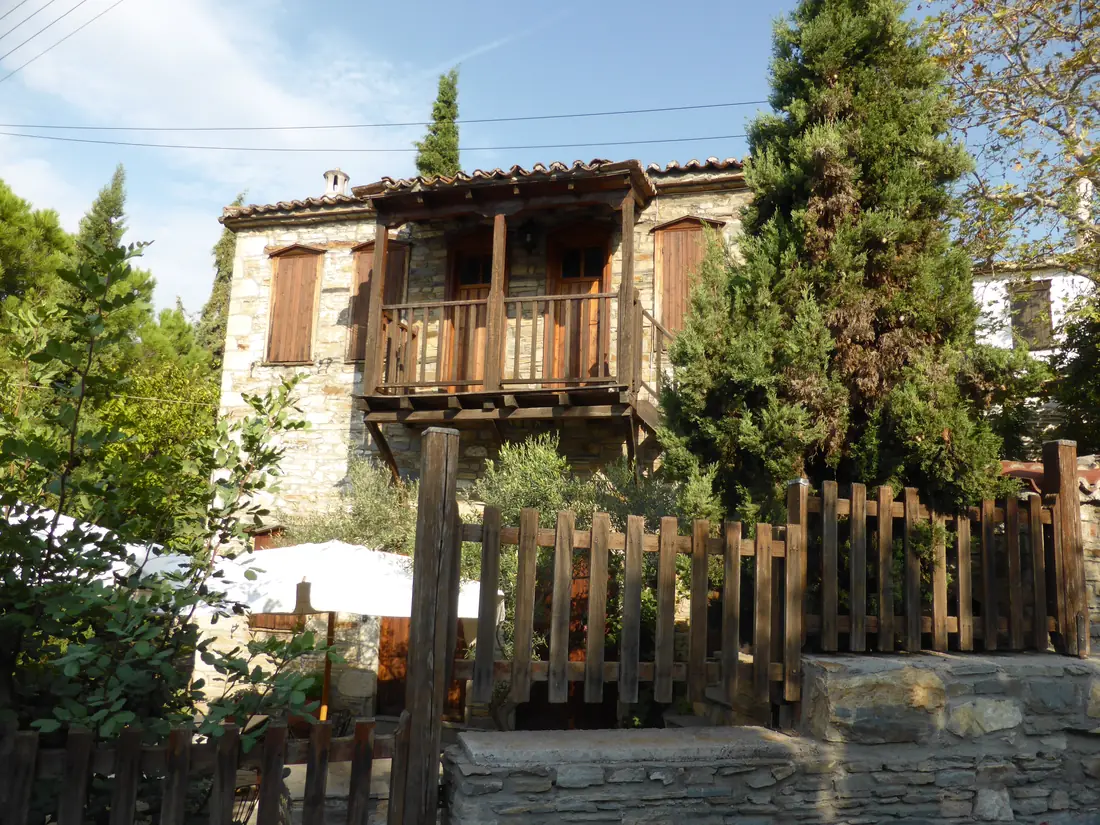
The walk up takes a good ten minutes and repays you twice in the evening: for the food, and for the view over the tiled roofs to the Toroneos gulf. Not everything up there is open year-round.
06
A grill taverna by the tree it is named after: simple, flavourful Greek cooking with the emphasis on meat. This is exactly the square the region itself describes as the place to sit under the big plane tree and eat traditionally.
07
Small round tables under plane trees, coffee from early in the morning, strings of lights in the evening. The cooking is modern Mediterranean, with vegetarian and vegan dishes and cocktails on an upper terrace; prices sit above those of an average taverna. In July and August, book ahead.
To Psistiri is on the street running parallel behind the promenade and is a locals' place — grill, pancetta, burgers, sausages. Apovrado Taverna Karalis has a courtyard and slow-cooked goat on the menu. For something quick there is Gyromania and, round the corner, Gyros tis Nikitis — both under ten euros, and which is better is an argument the village has with itself.
Fayaz does fresh bougatses in many varieties and home-made pites, open late. Loft Cafe Bar near the marina has one of the fullest breakfast menus in the village, with kagianas and plenty of shade. Mouragio on the promenade combines a traditional bakery with a modern café — home-made loukoumades, the honey balls that make more sense in Nikiti than anywhere else.
Boukadoura is not in the village; it sits on the beach at Elia, some kilometres away — and it is worth the drive. An old family farmhouse with a covered terrace and a flowered courtyard, run by Giota Koufadaki: moussaka, kebabs wrapped in vine leaves, house-made cheese with herbs, and organic wine from their own production.
Klimataria is in Metagitsi, about twenty minutes inland, and does grilled lamb and kontosouvli, with live music at weekends. That is not a detour, that is an evening.
Nikiti counts as one of Europe's most significant honey towns, and the flagship product is pine honey — a dark, strong honeydew honey, not a blossom honey. In the restaurants it shows up here and there: yoghurt with honey and walnuts, ice cream with honey, loukoumades. A systematic link between beekeeping and the kitchen — honey menus, partnerships, a festival — we could not verify. That it is worth taking a jar home, we can.
And then it is six hundred metres home.
Blue Breeze is in the Avaton Complex — close enough to walk back after dinner.
Discover the suite Up in the old village: the walk through Palia Nikiti.