Planning
When to come to Sithonia
The sea is warmer in September than in June. That is half the answer — here is the other half.
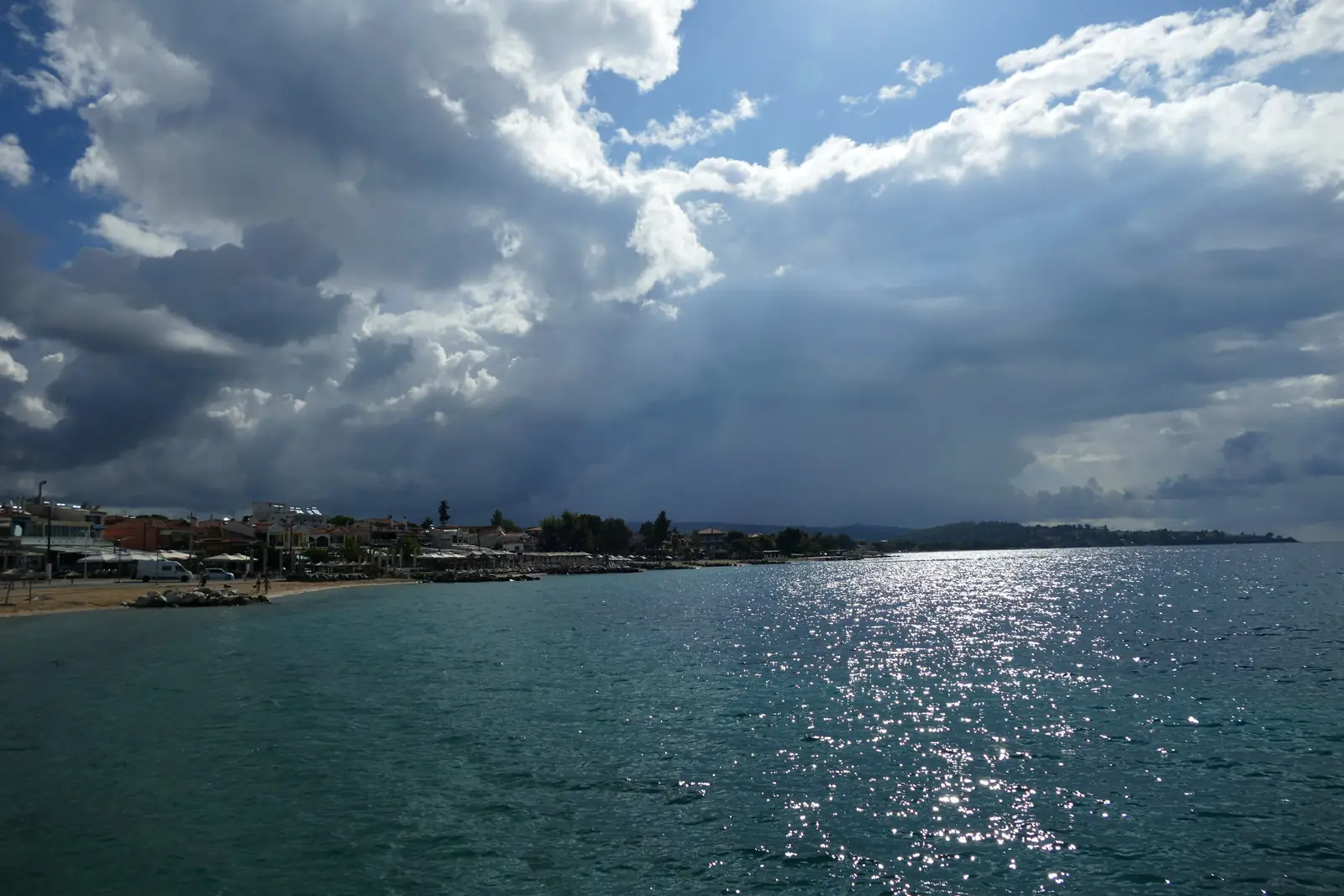
Foto: Kritzolina / Wikimedia Commons, CC BY-SA 4.0
Planning
The sea is warmer in September than in June. That is half the answer — here is the other half.
Most pages on this subject answer the question with a climate table. That is not wrong, but it does not help: July and August are hot everywhere in Greece, and you knew that already. The question that actually shapes the holiday is a different one — which matters more to you, warm water, empty beaches, or a village with something going on in the evening? Those three do not fall in the same month here.
So this page is organised by decisions rather than by months. The numbers are all here anyway — at the bottom, to look up.
| If what matters is … | … then | The catch |
|---|---|---|
| Warm water without the crowds | the first half of September | after mid-month it goes noticeably quiet — some beach bars pack up |
| Everything open, full programme | July and August | the busiest and most expensive weeks of the year, plus the afternoon Meltemi |
| Quiet, walking, prices | late May to mid-June | the sea is still 18 degrees in May — that is fresh, not warm |
| Small children | June or September | July and August, above 30 degrees in the afternoon, are hard work |
| As few people as possible | the first half of October | seasonal businesses close after mid-October; the weather turns changeable |
Water takes longer than air to warm up — and longer to cool down again. Which is why the sea off Sithonia is warmer in September than in June, and warmer in October than in May. That is not a feeling; it is physics:
| Month | Sea | Counterpart | Sea |
|---|---|---|---|
| June | 23.0–23.7 °C | September | 24.0–24.6 °C |
| May | 18.0–18.7 °C | October | 20.9–21.1 °C |
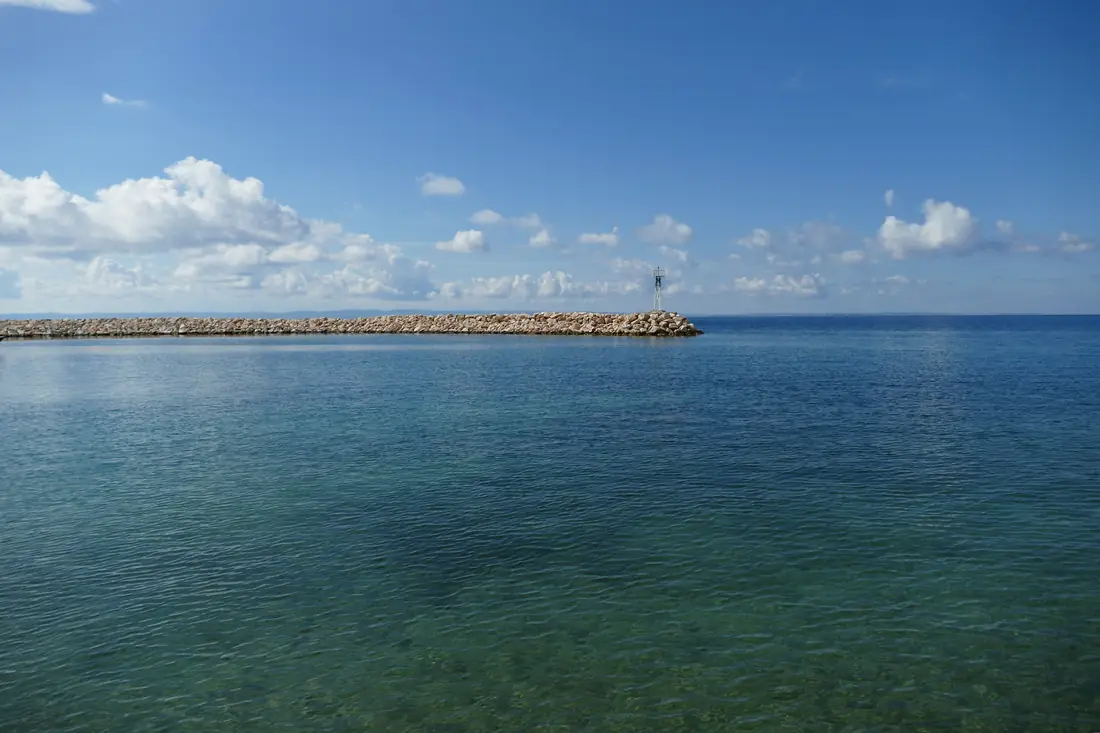
The air in September is a few degrees cooler than at the height of summer — 25 to 27 rather than 30 to 32 — and for most people that is the more comfortable state of affairs: you can be outside at midday without hunting for shade, and the water is still at high-summer temperature.
From late June to early September the Meltemi blows across the Aegean. It does not blow every day, but when it does it keeps to a dependable schedule: it comes up gently around ten or eleven in the morning, peaks between one and five in the afternoon, and drops away towards evening, most noticeably in sheltered bays. It is most frequent between mid-July and mid-August, with a pronounced maximum in the first week of August.
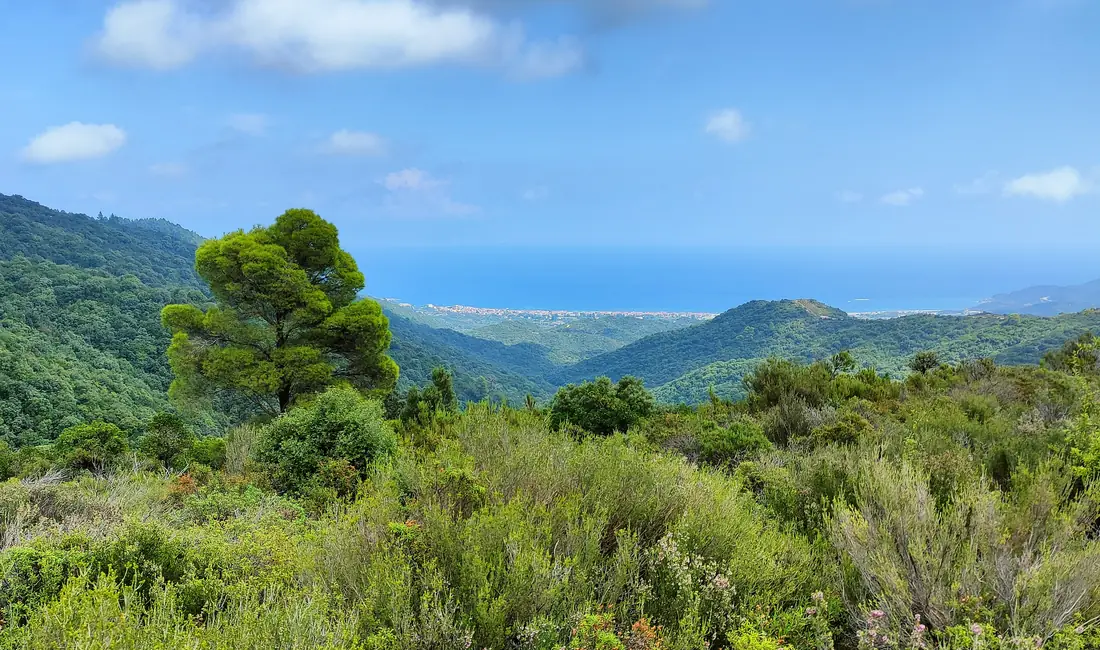
It comes from the north to north-east. On a peninsula running north to south, that makes a large difference: Sithonia's north- and north-east-facing coasts take it head on — waves, whitecaps, stirred-up sediment and with it murkier water. The western side lies in the lee; on the same days the water there is flat and clear. Nikiti is on that western side, on the Toroneos gulf.
The one decision each morning
Nikiti is one of the Chalkidiki villages that exists in winter too — around 2,900 permanent residents, a school, doctors, a baker, a cash machine. The seasonal trade is nonetheless a different thing from the village itself, and that is the part most easily overlooked when picking a month.
| Period | What is running |
|---|---|
| April | the season opens at Easter; many hotels open, beach service not yet |
| May | hotels fully operating; beach bars and sunbed service from late May |
| June – August | everything open; July and August are the peak |
| September | lively at first, noticeably quieter after mid-month |
| October | the first half runs; after mid-October seasonal businesses close or cut hours |
Occupancy figures from the Chalkidiki hoteliers' association tell the same story: around seventy per cent at Easter, fifty to sixty in May, seventy-five to eighty in June, around ninety in August — and up to ninety-five around 15 August in the strong years.
01
Dekapentavgoustos is the busiest stretch of the Greek year. The roads to Kassandra and Sithonia are under strain, accommodation is booked out months ahead, taverna tables on the 14th and 15th fill quickly, beaches are full well into the late morning. After the 16th the pressure drops away noticeably.
In 2027 the 15th falls on a Sunday — on a weekend, which amplifies the effect. If you want to travel then, book early; if you want quiet, move the dates.
02
The village festival. Vespers on the evening of the 14th, liturgy on the morning of the 15th, stalls through the lanes of the old village, tavernas and cafés full, music and dancing. Historically pilgrims came from across the region.
As a date it is remarkably well placed: it sits exactly in the stretch where the sea is still at high-summer temperature, the air has become pleasant, and the crowds have already gone.
Orthodox Easter falls on 2 May in 2027 — unusually late, and directly on the May Day weekend. For Chalkidiki that means the season starts later, and the first long weekend of the season is also the first busy one.
Long-run averages, given as a range across several climate portals. No substitute for a forecast.
| Month | Day | Night | Sea | Rain days | Sun |
|---|---|---|---|---|---|
| April | 18–19 °C | 8–11 °C | 14–15 °C | 4–8 | 8 h |
| May | 23–25 °C | 12–16 °C | 18–19 °C | 5–8 | 9 h |
| June | 27–30 °C | 16–21 °C | 23–24 °C | 3–5 | 11 h |
| July | 30–32 °C | 18–23 °C | 25–26 °C | 2–4 | 12 h |
| August | 29–32 °C | 18–24 °C | 26 °C | 2–4 | 11 h |
| September | 25–27 °C | 15–20 °C | 24–25 °C | 4 | 9 h |
| October | 20–22 °C | 11–15 °C | 21 °C | 4–7 | 6 h |
August is the driest month of the season at 23 to 27 millimetres, October the wettest at 58 to 63. July and August bring a few thunderstorm episodes a month — typically twenty to sixty minutes of heavy rain in the afternoon or evening, then it clears.
Unlike Mallorca or Crete, where charter traffic paces the week, around half of Chalkidiki's arrivals come by car. There is no customary arrival day here — you are freer with your dates than at a classic charter destination.
The suite opens in summer 2027.
Once you know when, the next question is where from. Blue Breeze is in Nikiti, six hundred metres from the water.
Discover the suite The comparison: where to stay on Sithonia.